White Scale on Poolside Artificial Turf in Tucson: Hard Water, Splash, and the Coping Line
Why the white band along a Tucson pool coping is calcium from hard water, not a chlorine burn, and how to keep splash and irrigation from crusting the infill.
Key Takeaways & Quick Summary
- Tucson Water says local groundwater is naturally hard, from calcium and magnesium, and that those minerals leave calcium deposits where water dries.
- The white coping band is dried pool splash or a sprinkler hitting the lawn. A gray crust over the whole yard is monsoon silt, which is a different cleanup.
- CDC home-pool guidance is pH 7.0–7.8 and at least 1 ppm free chlorine, or 2 ppm when cyanuric acid is used. Dried splash is a thin film of that water. Granular shock on the blades is a spill.
- Tucson's November rainfall normal is 0.56 inches, so weather will not rinse a crust out of the infill. Loose film can be broomed off. Packed scale has to be extracted.
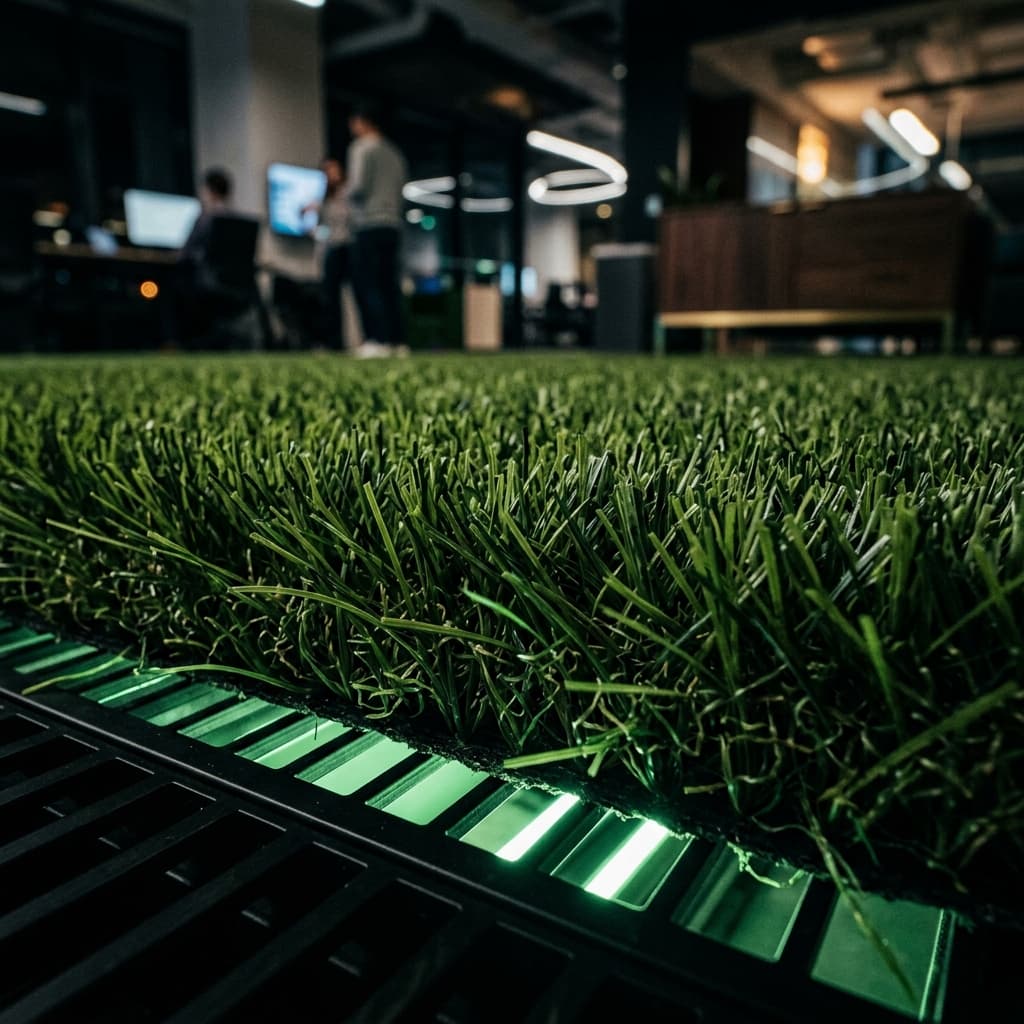
The white line at the coping is not dust. Dust in a Tucson yard is tan or gray, and it settles over the whole lawn. This band is chalk. It starts where bare feet leave the deck, runs a foot or two into the pile, and it is thicker on the side the afternoon breeze pushes splash. Pinch a blade there. It feels gritty. Ten feet away, on the part of the lawn nobody swims next to, the blades are smooth.
That band shows up first where artificial grass is the pool deck. Resort surrounds in the Catalina Foothills are the obvious ones. Courtyard pools in Oro Valley grow the same line, and so do the lawns that back up to community pools in SaddleBrooke and Dove Mountain. November is when people see it. The furniture comes in, the swimming months are mostly over, and the chalk is what the summer left on the blades.
The National Weather Service 1991–2020 normals for Tucson put November's average high at 75.1°F, the average low at 47.9°F, and the rainfall normal at 0.56 inches. A clear afternoon is still warm enough for a swim. That rain is not enough to rinse a film that dries the same day it lands.
1. Tucson Water Already Named the Mineral
Tucson Water's hard-water page describes hard water as a high dissolved mineral content of calcium and magnesium. The utility says Tucson groundwater is naturally hard, that hardness rises as that groundwater is blended with Central Arizona Project water, and that the water is safe to drink. The nuisance is calcium. The same page says hard water leaves calcium deposits on coolers, water heaters, dishwashers, and coffeemakers, and that high calcium spots and streaks glass.
A faucet aerator and a turf blade are the same event. Water sits, the water leaves, and the calcium stays. On a glass it is spots. On the polyethylene blades around a pool it is a pale crust in the splash zone.
The city page also tells residents to use white vinegar on dishes, glassware, shower heads, and faucet aerators. That advice is for those surfaces. Vinegar poured on the lawn stays in the sand, where feet and paws are, and it does not lift a crust that has already packed into the infill.
2. Splash, Overspray, and the Gray Crust That Is Something Else
Part the blades in three places before you treat anything.
- At the coping, the tips and the top of the sand are pale, and the color fades as you step away from the water. That is splash. Wet footprints disappear. The minerals do not.
- Away from the pool, a pale circle or a stripe on the blade tips lines up with a pop-up or a bubbler. That head is watering the lawn. Every cycle adds another coat. Turn it back onto the gravel or the plants.
- A gray-brown crust over the whole yard, including the side with no pool, is monsoon silt. Windblown caliche and mud are a different layer, covered in our guide to monsoon season turf care in Tucson. Scale is white and local. Silt is gray and general. A yard can hold both. The coping can be chalk while the far corner is still last summer's dust.
Look under the lounge chairs for a third film. Skin oil and sunscreen leave a dull smear, and desert dust sticks to it. A dry towel wiped on that blade comes away gray and slick. The chalk line will not come off on a towel. Oil sits on the fiber. Scale sits in the sand.
3. Maintained Pool Water Is Not a Jug of Shock
The CDC's guidance for home pools recommends a pH of 7.0 to 7.8 and a free chlorine concentration of at least 1 ppm. If the pool uses cyanuric acid, or a chlorine product that contains it, the CDC recommends at least 2 ppm. Sunlight, sweat, and dirt all lower that chlorine. A splash that dries on the turf is a thin film of water held in that range. It is not a bucket of shock, and it is not what burns a hole in a blade.
The minerals in the film still stay, because calcium and magnesium do not evaporate.
Granular chlorine is the exception. Those granules belong in the water. A few grains on the blades are a spill. Brush them off dry, into a dustpan. Do not hose them down into the infill. Granules that get wet against a fiber leave a bleached spot. Liquid acid used to lower the pH stays in the bucket and the pool. If a splash of that acid hits the pile, flush the spot with plenty of plain water right away so it does not sit on the fiber, then stop. Do not follow the rinse with a second chemical.
4. Move Today's Splash Before It Dries
Work in the morning, while yesterday's splash is still a film.
- Rinse the coping band lightly and push that water off the turf, toward the deck drain or the gravel. You are moving fresh minerals off the blades. You are not washing the yard. A soak drives dust deeper and wets the sand. Why a hose is a poor cleaner for the rest of the lawn is in our fall and winter turf care guide.
- Aim every irrigation head off the pile. A head that wets the turf each morning is making scale on a schedule.
- A soft broom knocks loose chalk off the tips. A metal rake catches the tuft and frays the blades.
- Shake towels over the deck. Sunscreen left on a blade is a sticky spot, and the next dusting of desert silt hangs onto it.
5. When the Band Is Already a Crust
Part the blades at the coping. If the sand is pale and the base of each blade feels gritty, the scale is in the infill. A blower takes loose powder off the tips and leaves the rest. A hose wets the crust and lets it set harder when the afternoon dries it. November's 0.56 inches of rain will not dissolve it, and a crusted band sheds the next shower sideways onto the deck instead of through the backing.
Power brooming opens that sand, and extraction lifts the mineral out of it. An artificial turf cleaning is the visit that reaches that layer. On a Foothills surround, artificial turf cleaning in the Catalina Foothills is usually this crust, plus whatever the monsoon left in the same sand. It becomes a pet-odor visit only when the dog uses that strip too.
A pool surround with no dogs does well twice a year, in spring and again after the last hot afternoons. A maintenance plan puts both dates on the calendar so the band does not get a full summer to harden. A single crusted edge, with the rest of the lawn still upright, fits the service packages. The Turf Tune-Up starts at $150 and Refresh+ at $195, each up to 300 square feet.
If the band is wide, the deck drains onto the lawn, or the tips at the coping crumble when you pinch them, request a quote and say the lawn is poolside. Cleaning takes the scale out. A fiber that powders between your fingers is worn, and that piece is a repair for the installer.
What Not to Do
- Do not pour muriatic acid, a calcium remover, vinegar, or bleach on the band. The vinegar tip from Tucson Water is for glass and faucet aerators. Acid that dissolves faucet scale also attacks the fiber and the backing, and the liquid remains in the sand.
- Do not pressure-wash the coping line. A homeowner unit throws infill into the pool and across the deck.
- Do not set the granular-shock bucket on the turf, and do not broadcast granules upwind of the lawn.
- Do not rinse the grass with the water a softener discharges when it recharges. That discharge is the brine the unit uses to flush the minerals it captured. It is salty, and it is not a cleaner.
- Do not wait on a winter rain. The November normal is 0.56 inches. A packed white band will still be there in December, with holiday chairs sitting on it.
Brush today's splash off while it is still loose chalk. If the coping line in the Foothills, Oro Valley, SaddleBrooke, or anywhere else in the Tucson metro is already a white crust underfoot, that sand has to be extracted. Call 520-248-3478 and say whether a sprinkler hits the same lawn.
Frequently Asked Questions
Is the white powder on my artificial turf chlorine damage?
Usually it is calcium left behind when hard Tucson water dries, not a bleach burn. Splash from a pool kept near CDC levels, at least 1 ppm free chlorine and pH 7.0–7.8, is a thin film. The minerals stay after the water is gone. Bleached, melted spots come from granular shock or pool acid left sitting on the blades.
Can I use vinegar or muriatic acid to dissolve scale on artificial grass?
Leave both off the lawn. Tucson Water suggests white vinegar for dishes, glassware, shower heads, and faucet aerators. That is not a turf treatment. Acid that eats faucet scale also attacks the fiber and the backing, and whatever you pour stays in the sand where bare feet land.
Will a hose rinse stop the white line by the pool?
A light morning rinse can move today's splash off the coping band before it dries, if you push that water toward the deck drain or the gravel. It will not lift scale that has already packed into the infill. A long soak wets the sand and lets the crust reset harder when the afternoon dries it.
Does pool water ruin artificial turf in Tucson?
Ordinary splash does not melt the blades. Left in place, the calcium crust stiffens the pile, holds dust, and makes that edge shed water instead of draining. Brush fresh film off, keep sprinklers off the lawn, and have a packed band extracted. Fibers that powder when you pinch them are worn, and that section is a repair for the installer.
Veteran-owned and operated synthetic grass restoration specialists serving Tucson, Oro Valley, Marana, Catalina Foothills, Sahuarita, and all of Pima County, AZ. Backed by our 7-Day 100% Odor Elimination Guarantee.