Fall & Winter Artificial Turf Care in Tucson: Desert Broom, Snowbirds & Dry-Air Static
Late October through winter turf care for Tucson, Green Valley, and SaddleBrooke: desert broom seed, hidden pet odors, dry-air static, and drainage before holiday guests.
Key Takeaways & Quick Summary
- Tucson's October and November rainfall normals are only 0.67 and 0.56 inches, so dust and desert broom seed sit in the turf until winter rain tests the drainage.
- Female desert broom shrubs release fluffy white seed heads in autumn; hosing that fluff into artificial turf mats it into the thatch.
- Cooler winter air hides uric acid odors, which is why a dog yard can smell fine at Thanksgiving and terrible the following May.
- A late-October or November power brooming and extraction, before snowbirds and holiday guests settle in, clears monsoon silt, seed mats, and dormant pet waste.
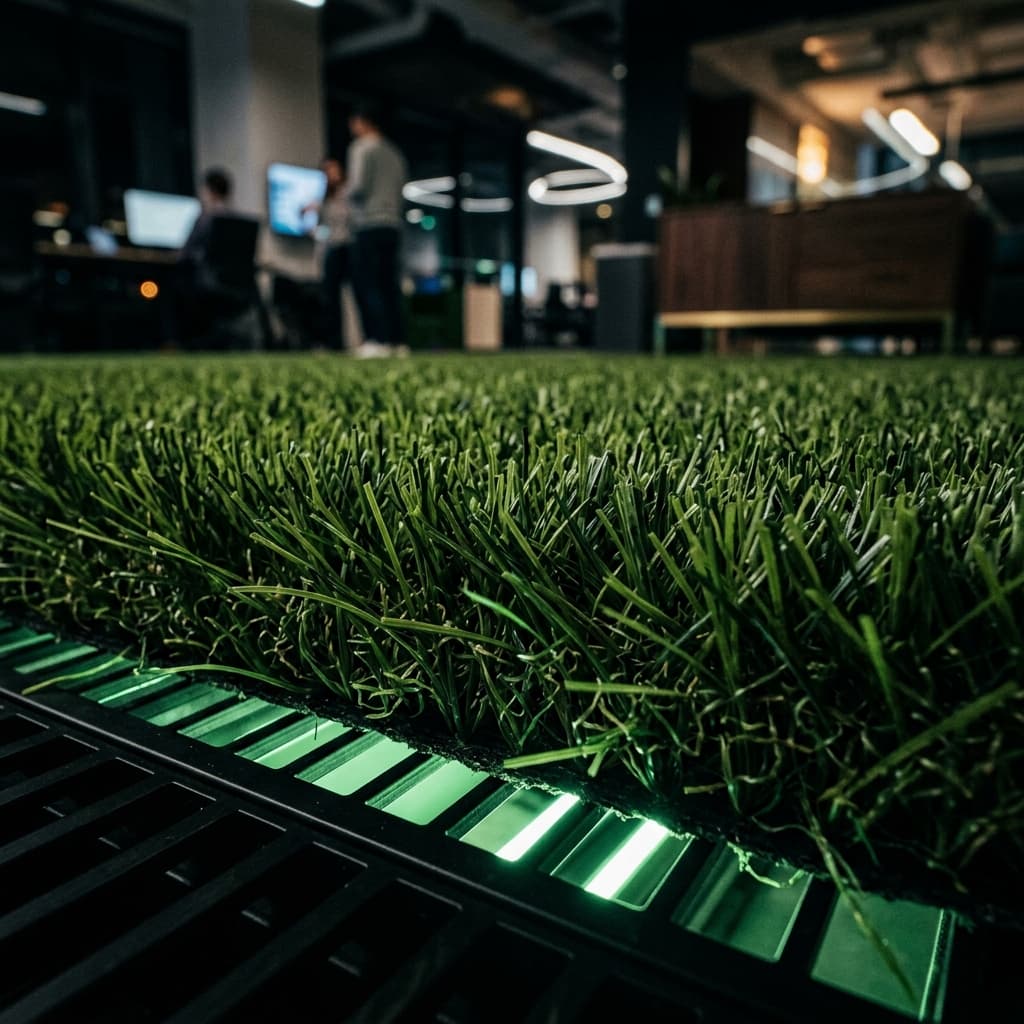
Late October is when a Southern Arizona backyard changes jobs. The monsoon is over, highs slide out of the 90s, and the synthetic lawn that baked all summer becomes the room where snowbirds unpack and Thanksgiving happens outside. In Tucson, Green Valley, SaddleBrooke, Oro Valley, and Dove Mountain, this is the cleaning window most people skip, because the yard finally smells fine.
Through February it catches desert broom seed, hides pet waste in cool infill, builds static in dry air, and waits on winter rain to test drainage the monsoon may have plugged.
1. Cool Season Weather Is Dry, Then Suddenly Wet
The National Weather Service 1991–2020 normals for Tucson put October's average high at 86.3°F and the low at 59.0°F, with only 0.67 inches of rain. November falls to a 75.1°F high and a 47.9°F low, with 0.56 inches. December's average high is 65.5°F and January's is 66.5°F. Comfortable, and dry. December (0.96 inches), January (0.84), and February (0.84) add up to 2.64 inches for the whole winter — Pacific-storm rain, not a second monsoon. July and August normally deliver 2.21 and 1.98 inches on their own.
Dry weeks let dust, hair, and seed fluff sit in the pile. A winter soaker then has to pass through whatever summer left behind. If the lawn still holds a puddle after a December shower while the sidewalk has dried, the weep holes are packed with silt.
Our guide to monsoon season turf care in Tucson explains how windblown caliche becomes that crust. A fall artificial turf cleaning pulls the silt out before the puddle is under the patio table.
2. Desert Broom Turns the Yard White
If a block wall backs up to a wash, a vacant lot, or a roadside, November brings a cotton-like drift of white fluff that sticks to every blade. That is desert broom, Baccharis sarothroides. The University of Arizona Cooperative Extension's Pima County Master Gardeners guide, Native Plants of the Tucson Area, notes that male and female flowers grow on separate plants, and that the fluffy white seed heads are iconic in autumn washes.
Only the female shrubs release it. On open desert the fluff keeps moving. Turf blades comb it out of the air, and one hose rinse plus a weekend of footsteps presses it into a felt mat. Once that mat dries it holds the next layer of dust, so the lawn looks gray from the patio.
From late October through January:
- Blow the fluff off while it is dry. A leaf blower on low, aimed across the pile, works. A metal rake snags tufts and splits fibers.
- Do not hose a fresh layer into the infill. Water turns the seeds into a paste.
- Start along block walls, behind the condenser, at downspouts, and on the fringe of a putting green. Short-pile greens trap the cotton faster, and a thin film is enough to knock a putt off line.
- If the lawn already feels crusty, blowing will not reach the mat. It has to be power-broomed and extracted.
Open-desert edges — Rita Ranch, Vail, Corona de Tucson, Marana, and Dove Mountain — catch the most. Green Valley, Oro Valley, and the Catalina Foothills get it anywhere a female shrub leans over the wall. The fluff sits loose in October and November. December rain glues it down, so blow it off before that storm.
3. Cool Air Hides the Pet Problem
June's normal high in Tucson is 101.2°F. January's is 66.5°F. That gap is why a dog yard can smell fine at Thanksgiving and unbearable the next May. Cooler air slows ammonia coming off uric acid crystals in the infill and the rock under the backing. The crystals stay. The hot half of that cycle is in why artificial turf smells worse during Arizona summers. Fall is when people miss it, because nothing smells wrong yet.
- Dogs live there year-round. Mild months of urine are already in the pile, and holiday traffic packs those lanes flat.
- The house sat empty. A vacant yard is usually silt, seed, and matting, unless a sitter or neighbor dog used it. Smell the downwind corner on the first warm afternoon. Sour means an enzymatic flush, not a hose.
- Visiting dogs are coming. Fresh urine soaks into an old crust faster than into a clean pile. Clean first.
Rinse the one corner your own dog uses, in the morning. Do not soak the whole lawn. Water without extraction wets dormant crystals and drives dust deeper. Pick up solid waste daily. Vinegar, bleach, and perfume sprays leave the crystals under the sand and the residue on the blades.
4. Static Shocks and Flat Walkways
Those dry weeks are also when people drag chairs across the grass in shoes. Static on synthetic turf is not a failed installation. A position paper on static electricity from the European Synthetic Turf Council explains that charge builds when surfaces rub in very dry air, that shocks are more common in cooler, drier months, and that on turf this is normal rather than a defect. It shows up most on newer lawns and usually fades with use. A long desert dry spell can still bring it back.
Infill clinging to pant cuffs is the early sign, then a snap at the patio door or pool gate. Usually that is an annoyance. The same paper notes a discharge can upset hearing-aid electronics.
A light mist of plain water on a dry morning bleeds the charge off before a party. Do not soak the yard, and skip fabric softener or detergent unless your turf manufacturer approves it. The industry note is clear that casual chemicals can age the fibers or the backing.
Summer heat also set blades flat, and cool air will not stand them up. Dragging furniture across dry turf before Thanksgiving makes those lanes shiny, because you see the side of each ribbon. A soft nylon broom moves loose debris. It will not break sand that silt has mortared in place. That takes a motorized power broom, before the chairs go out.
5. One Visit Before the House Is Full
One service between late October and early December covers the season you are about to use the lawn:
- Power brooming lifts blades pinned down all summer, including the path from the slider to the grill.
- Extraction pulls desert broom seed, caliche dust, mesquite litter, and pet hair out instead of rinsing them deeper.
- Clearing weep holes gives December and January rain a path into the base.
- On dog yards, a bio-enzymatic flush digests the uric acid the cool air is hiding.
- An infill check shows whether storms stripped the sand that holds blades up. Part the fibers. Visible black backing, or blades that flop with no support, means the lawn needs a top-off before winter traffic.
Pet-free lawns and putting greens often do well twice a year, and this is the post-monsoon visit. A single-dog yard usually belongs on a quarterly rhythm. Two or more dogs, or a tight side run, need a shorter gap. Our maintenance plans lock that in — monthly, quarterly, or twice a year — so next October is already booked.
Snowbird houses should go first. If the place in Green Valley sat through the dust storms, the crust, the seed mat, and the flat lanes are still easy to fix the week you return. The same clock runs in SaddleBrooke, where turf maintenance before the social season keeps the lawn from looking matted at the holidays. Oro Valley, Dove Mountain, Marana, and the Catalina Foothills are on it too.
Service packages start with a Tune-Up at $150 and Refresh+ at $195, each up to 300 square feet, then by the square foot. Dog yards that need the enzymatic step cost more. If the yard mixes pets, a putting green, and a summer of vacancy, request a quote and say when the first guests land.
What Not to Do Before February
- Do not hose the whole lawn to freshen it before a party. Crystals smell as the water dries, and the spray drives fluff deeper.
- Do not pressure wash. A homeowner unit blows infill out and can tear seam tape.
- Do not use a metal rake or wire brush. They catch the tuft and fray the blades.
- Do not pour bleach or weed killer on winter sprouts. Those weeds grow in dust on top of the backing. Remove the dust and the seedbed goes with it.
- Do not wait until March because the patio view looks fine. You are seeing blade tips. The crust is at the bottom of the pile.
Blow the fluff off weekly while it is loose. Mist, don't soak, if the gate shocks you. For a lawn in the Tucson metro that is about to host people, call 520-248-3478. November is the quiet month. May is the loud one.
Frequently Asked Questions
When should I clean artificial turf for snowbird season in Tucson?
Book between late October and early December, after monsoon dust season and before holiday guests. That visit clears summer silt and desert broom seed while pet odors are still dormant, so the lawn is ready for the months you actually use it.
How do I get desert broom fluff out of artificial grass?
Blow it off weekly while it is still dry, with a leaf blower aimed across the pile. Do not hose fresh fluff into the infill, or it mats into a felt layer. If the lawn already feels crusty, it needs power brooming and extraction.
Why does artificial turf shock me in an Arizona winter but not in summer?
Very dry air lets static build as shoes rub the synthetic blades, and Tucson's October through January rainfall is light enough for that to show up. A light morning mist of plain water usually discharges it. Do not soak the lawn, and do not apply fabric softener unless your turf manufacturer says it is safe.
Will winter rain wash my artificial turf clean?
No. December through February normally total about 2.64 inches in Tucson, enough to wet a layer of dust and seed but not enough to flush it out. If water puddles, monsoon silt is still plugging the backing, and the rain only makes that crust harder.
Veteran-owned and operated synthetic grass restoration specialists serving Tucson, Oro Valley, Marana, Catalina Foothills, Sahuarita, and all of Pima County, AZ. Backed by our 7-Day 100% Odor Elimination Guarantee.