The Complete Artificial Turf Maintenance Guide for Arizona Homeowners
Your month-by-month Arizona artificial turf maintenance guide covering UV protection, low-E window glare, monsoon dust extraction, infill top-offs, and desert weed control.
Key Takeaways & Quick Summary
- Sonoran Desert UV radiation, 110°F+ heat, and haboob dust storms require a desert-specific turf care checklist.
- Keeping infill at proper depth shields the primary turf backing from UV breakdown and keeps blades upright to disperse heat.
- Never spray harsh acidic or petroleum-based herbicides on artificial grass—use turf-safe weed extraction and pre-emergents.
- Inspect turf near south- and west-facing low-E windows to prevent reflected solar glare from melting synthetic fibers.
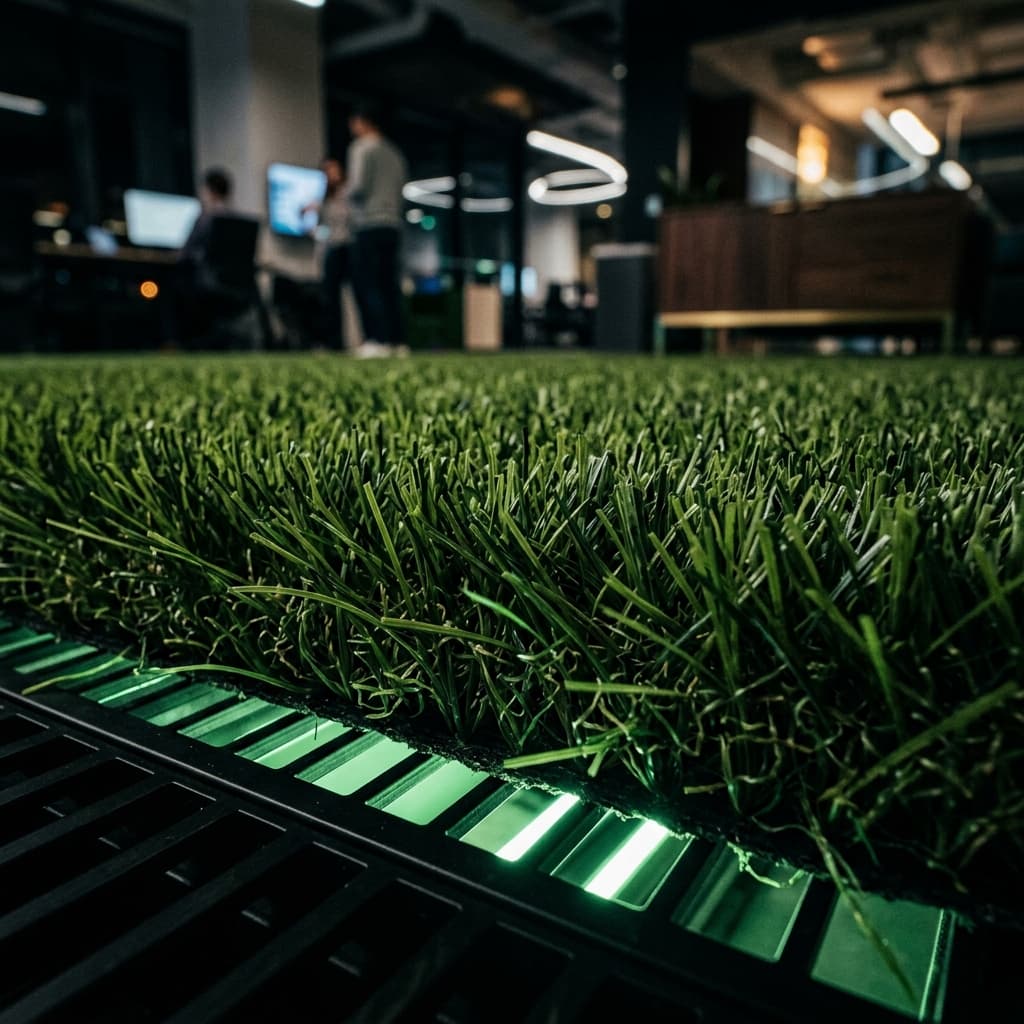
Southern Arizona subjects outdoor landscaping to some of the most extreme environmental conditions in North America. From 110°F June heatwaves and intense UV radiation to July haboobs and torrential August monsoon downpours, synthetic grass in Tucson, Oro Valley, and Green Valley takes a year-round beating.
Follow this comprehensive Arizona Turf Maintenance guide to protect your warranty and keep your lawn looking lush for decades.
1. Combating Extreme UV Rays & Heat Retention
Modern polyethylene turf fibers are UV-stabilized, but when grass blades become matted down from foot traffic, a larger surface area of each blade is exposed directly to the overhead sun. Flattened turf not only looks shiny and unnatural—it also traps heat.
- Keep Blades Vertical: Routine cross-brushing lifts fibers upright so air circulates through the pile and light scatters naturally.
- Maintain Infill Depth: Proper infill depth covers the lower 60–70% of the turf blade, shielding the primary backing and tuft lock from UV degradation.
- Watch for Low-E Window Glare: Energy-efficient windows in Marana, Dove Mountain, and the Catalina Foothills can reflect concentrated beams of sunlight exceeding 180°F, melting turf fibers. Read our full guide on preventing window glare turf damage.
2. Managing Monsoon Dust & Caliche Silt
Every July through September, summer monsoons sweep fine alkaline dust across the Santa Cruz and Rillito valleys. When rain follows a dust storm, that silt washes into your infill layer.
If left unextracted in dusty corridors like Vail, Rita Ranch, or Sahuarita, monsoon silt cements the silica sand together and blocks the drainage holes punched into your turf backing. Scheduling a post-monsoon Artificial Turf Cleaning extracts the silt before it hardens.
3. Safe Desert Weed Control in Synthetic Grass
Homeowners are often surprised to see spurge, crabgrass, or desert weeds sprouting in artificial turf even when a weed barrier fabric was installed underneath. Why? Because desert winds blow dust and weed seeds onto the top of the turf, germinating right inside the infill sand!
- What NOT to Use: Never spray petroleum-based or high-acid herbicides, which can delaminate polyurethane turf backings and leave toxic residues where pets play.
- The Safe Solution: During our Ultimate Restoration Package and Commercial Turf Cleaning, we mechanically extract shallow-rooted weeds and apply non-staining, backing-safe weed prevention.
4. Seasonal Arizona Turf Care Calendar
- Spring (March–May): Decompact winter traffic matting, inspect seams and perimeter nails, and flush out winter pet urine before summer heat arrives.
- Summer (June–August): Focus on Bio-Enzymatic Turf Deodorizing for dog owners and apply turf cooling conditioning treatments.
- Fall (September–November): Essential post-monsoon power brooming, dust extraction, and infill top-offs across Casas Adobes, Tanque Verde, and SaddleBrooke.
- Winter (December–February): Remove fallen mesquite and acacia litter and sanitize pet zones for cooler-weather backyard gatherings.
Want effortless year-round care? Explore our Hero Club Maintenance Plans or request a free estimate today!
Frequently Asked Questions
Does artificial turf need infill replenished in Arizona?
Yes. Heavy monsoon downpours, windstorms, and pet traffic gradually displace silica sand infill. Topping off infill every 12 to 24 months keeps grass blades standing upright and protects the turf backing from UV rays.
How do I stop desert weeds from growing in my artificial grass?
Most weeds in Arizona turf sprout on top of the backing inside windblown dust trapped in the infill. Routine power brooming extracts the dust bed before seeds can germinate, and turf-safe pre-emergent treatments block new growth.
Veteran-owned and operated synthetic grass restoration specialists serving Tucson, Oro Valley, Marana, Catalina Foothills, Sahuarita, and all of Pima County, AZ. Backed by our 7-Day 100% Odor Elimination Guarantee.